Can you build on paddy land in Sri Lanka?
Not without written permission. Under the Agrarian Development Act No. 46 of 2000, paddy land cannot be filled, built on or used for anything except cultivation unless the Commissioner-General of Agrarian Development agrees in writing. Doing it anyway is an offence, and the court can order the land restored. Price paddy as a view, not building land.
What does the law say?
The Agrarian Development Act No. 46 of 2000 protects paddy land:
- Section 32: anyone who, without the Commissioner-General's written permission, fills paddy land, builds on it, removes soil from it or uses it for a non-agricultural purpose commits an offence, as does anyone who helps. The court can order any construction or material removed, and a daily fine applies while the offence continues.
- Section 33: no one may fill paddy land or remove soil from it without written permission; officers can seek a restraining order from the Magistrate's Court, and vehicles and machinery used can be forfeited.
- Section 34: paddy land may only be used for agricultural cultivation unless written permission is given; the Commissioner-General can withdraw permission and require the land to be restored.
The Act has been amended since 2000; ask your lawyer for the current penalties.
How do I know if a plot is paddy land?
- The deed and survey plan. Look at the land's name and description: names ending in kumbura usually mean paddy field; deniya and owita indicate low-lying or former paddy land. The schedule may describe the land as "paddy".
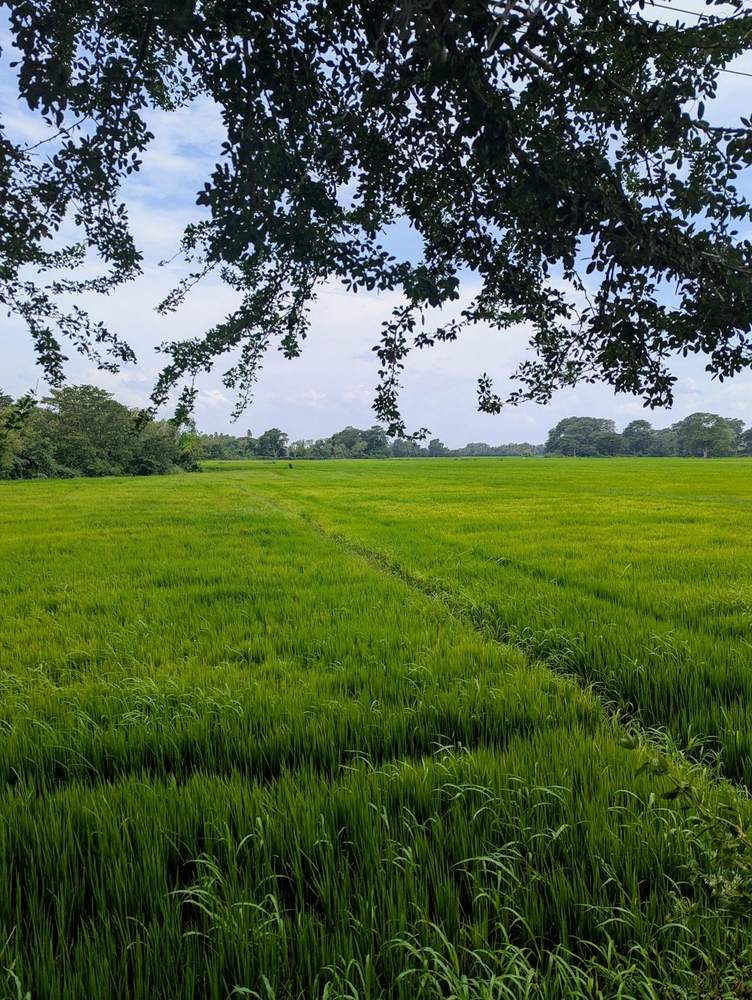
- The ground. Standing water, bunds, or a field that floods in the monsoon.
- The authorities. Your lawyer can check with the Agrarian Services Centre for the area whether the land is recorded as paddy, and whether any permission has been granted.
- The advert. "Paddy view" usually means the plot looks over paddy; "paddyfront" or a very low price per perch can mean part of the plot is paddy. Ask the agent which part, with the survey plan.
Can a paddy plot still be a good buy?
Yes, if you buy it for what it is. Many of the coast's best views are over paddy, and the paddy behind the railway around Ahangama and Koggala is part of why buyers come. What matters is that the house sits on high land (a garden, not a field) that is clearly separate on the survey plan, with legal access. Pay a paddy price for the paddy part and a building-land price only for the buildable part. Our price per perch guide shows how wide the range is.
Frequently asked questions
Can I get permission to build on paddy land?
The Act allows the Commissioner-General to give written permission, but you should not buy on the assumption that you will get it. If a seller says permission is available, make it a condition of the agreement to sell and get the written permission before you pay the balance.
What happens if I fill paddy land without permission?
It is an offence under sections 32 and 33. You can be fined or imprisoned, fined daily while it continues, ordered to remove the fill or building and restore the land, and have equipment forfeited. A buyer who later discovers unauthorised filling can inherit the problem, so ask your lawyer to check.
Is land described as "high land" safe to build on?
High land (goda idam) is not paddy, so the Agrarian Development Act's paddy rules do not apply, but every other check still does: local authority approval, the coastal setback near the sea, and road access. See building a villa: cost and approvals.
Does paddy land affect the price?
Yes. Paddy-view plots are often among the cheapest per perch on the coast, partly because some of the land cannot be built on. Value the buildable area separately from the paddy.
Who checks this during a purchase?
Your own lawyer, as part of the title search and reservation checks, and your surveyor, who marks the paddy boundary on the plan. The order is in how to check a land deed and the 8 steps to buy land safely.
Sources
- Agrarian Development Act No. 46 of 2000, sections 32, 33 and 34, Government of Sri Lanka
- Land descriptions on deeds (kumbura, deniya, owita) and paddy clearance, as set out in our guide the 8 steps to buy land safely.
- Perch & Acre town pages for Ahangama, Koggala and Habaraduwa (paddy behind the railway).
General information, not legal advice. Laws and rates change; confirm every point with your own Sri Lankan lawyer before you pay a deposit.