Coastal setback rules for beachfront land in Sri Lanka
Any building within 300 m of the mean high water line in Sri Lanka needs a Coast Conservation permit. On beachfront land a setback also applies: under the revised 2024 coastal plan it is 35 m from Unawatuna to Goyambokka near Tangalle (a 10 m no-build reservation plus a 25 m restricted area), and 40 m on either side.
What is the coastal zone?
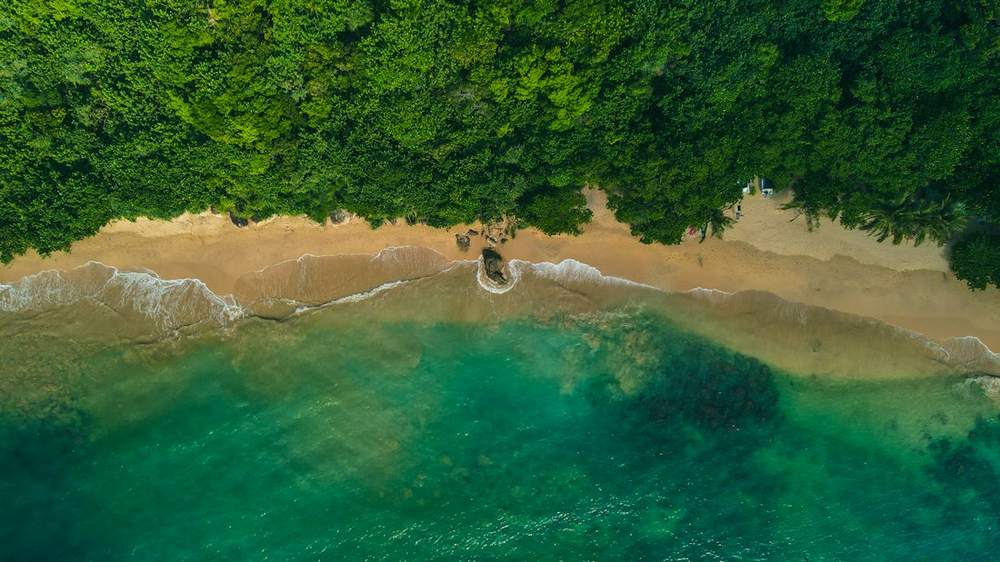
The coastal zone is the strip within 300 m landward of the mean high water line, plus 2 km seaward of the mean low water line. Where a river, stream or lagoon connects to the sea, the landward limit extends up to 2 km inland, measured from a baseline across the mouth. Development anywhere in the zone needs a permit, and the setback is the part closest to the sea where building is banned or limited. On the south coast that covers every beachfront plot, and many lagoon-side plots at Koggala, Rekawa and elsewhere.
How big is the setback on the south coast?
The Revised Coastal Zone and Coastal Resource Management Plan 2024 (plan period 2024 to 2029) sets the setback by coastal segment:
| Stretch | Reservation (no build) | Restricted | Total setback |
|---|---|---|---|
| Bambagala Ela to Unawatuna Welledewalaya (Galle side) | 15 m | 25 m | 40 m |
| Unawatuna Welledewalaya to Goyambokka headland (Unawatuna, Thalpe, Koggala, Ahangama, Midigama, Weligama, Mirissa, Matara, Dickwella, Hiriketiya) | 10 m | 25 m | 35 m |
| Goyambokka headland to Rekawa West (Tangalle) | 15 m | 25 m | 40 m |
The previous plan, gazetted on 25 May 2018, split the same coast into shorter segments with totals of 35 m to 45 m (45 m from Unawatuna to Goviyapana, 35 m from Goviyapana to Matara). If a seller quotes an old setback, ask which plan it comes from. Setbacks are measured from a seaward reference line, usually the permanent vegetation line on the beach, or the top of a cliff, a rock outcrop or an existing coast protection structure.
What can I build in the setback?
- Reservation area (the first 10 m or 15 m): essentially nothing private. It is reserved for essential uses such as coast protection, fisheries landing structures and public safety, plus small temporary structures under CC&CRMD guidelines.
- Restricted area (the next 25 m): dwellings and tourism-related uses may be allowed, provided they do not block vertical access to the beach or lateral access along it, and subject to the permit conditions.
- Beyond the setback, inside 300 m: normal construction, still with a CC&CRMD permit and local authority approval.
On a beachfront plot 50 m deep, a 35 m setback leaves only 15 m of fully buildable depth, so price the plot on what you can actually build. Our beachfront land listings and the price guide show how much the beach premium is.
How do I get a Coast Conservation permit?
Apply to the CC&CRMD with the deed, survey plan, building plans and site details; the permit is issued by its Director General. Your architect or lawyer will know how the local authority expects the two approvals to be sequenced. Larger projects can also need an environmental assessment, and the permit can carry conditions. Build nothing, not even a boundary wall, in the coastal zone without the permit: unauthorised structures can be ordered removed, and the Daily Mirror reported enforcement against unauthorised establishments on Hiriketiya beach in March 2025. The rest of the approvals are in the villa building guide.
Frequently asked questions
How close to the sea can I build in Sri Lanka?
On the south coast from Unawatuna to Goyambokka, just west of Tangalle, the setback under the 2024 revised plan is 35 m from the seaward reference line, and only the outer 25 m of that can take a dwelling, subject to a permit. In practice most villas are built behind the setback. Confirm the line for your plot with the CC&CRMD before you buy.
Does the 300 m coastal zone mean I cannot build within 300 m of the sea?
No. The 300 m zone is where you need a permit. The no-build and restricted areas are the much narrower setback (35 m to 40 m on this coast). Outside the setback you can build with a CC&CRMD permit and local authority approval.
Do the rules apply to lagoon and river plots?
Yes. Where a lagoon, river or stream connects to the sea, the coastal zone extends up to 2 km inland, so plots on Koggala lake or along a river mouth may need a CC&CRMD permit too. Ask the department or your lawyer.
Can the setback change after I buy?
It can. The plan is revised periodically (2018, then 2024 for 2024 to 2029), and erosion moves the vegetation line. Get the setback confirmed in writing for your plot before you pay a deposit, and keep a margin.
Is beachfront land a good buy for a foreigner?
It can be, on a 99-year lease, if the buildable depth after the setback suits your plans and the title is clean. See can a foreigner buy land in Sri Lanka and the 99-year lease explained.
Sources
- Revised Coastal Zone and Coastal Resource Management Plan 2024 (coastal zone definition; reservation and restricted areas; Table 6-1 setbacks for segments 20 to 22; permits issued by the Director General), Coast Conservation and Coastal Resource Management Department
- Setbacks for development activities in the coastal zone, Table 6.1, Gazette Extraordinary of 25 May 2018, Coast Conservation Department
- Coast Conservation Act No. 57 of 1981, section 14 permits and the 300 m coastal zone; enforcement at Hiriketiya, Daily Mirror, 13 March 2025
General information, not legal advice. Laws and rates change; confirm every point with your own Sri Lankan lawyer before you pay a deposit.